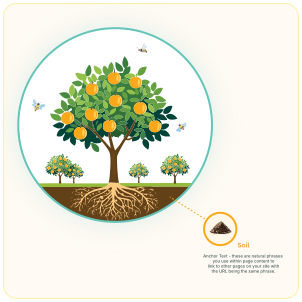
In practice, your soil has three layers for each of your pillars: the primary term (the main way you describe it), 2 to 3 supporting phrases (the related terms you naturally use), and any brand-specific language (the words only you use). Together, these three layers wrap around every pillar and feed it meaning.
For a wedding photographer, the soil around the "wedding day photography" pillar might include phrases like "full-day coverage," "candid documentary style," and their signature approach: "quiet-witness photography." For a bookkeeper, the soil around "small business bookkeeping" might be "monthly reconciliation," "cash-flow clarity," and "Xero certified."
It is also the anchor text. Every time you link between pages on your site, the words you use to link with tell AI what the target page is about. "Read more about our engagement sessions" feeds soil. "Learn more" feeds nothing. Descriptive anchor text is one of the simplest ways to make your ecosystem more visible.
A bakery, two ways
Same bakery. Same bread. The only difference is whether the terminology stays consistent across the site.
Rich Soil
The bakery that gets recommended
Consistent terms across the site: "sourdough boules," "artisan bread," "hand-shaped croissants," "custom celebration cakes." The homepage, the menu, and the about page all use the same words.
When someone asks AI for "sourdough near me," there is no ambiguity. This bakery gets recommended.
Thin Soil
The bakery that stays invisible
Interchangeable terms everywhere: "bread," "loaves," "baked goods," "house-made." The homepage calls them "cakes for special occasions." The menu says "celebration desserts."
AI cannot tell what this bakery actually specializes in. The bread might be the best in town, but nothing on the site signals it.
Consistent language equals clear meaning, which equals easier to find and recommend.